

| Nama : | I PUTU EKA BUDIARTA |
|---|---|
| Universitas : | Universitas Warmadewa |
| Jurusan : | Arsitektur |
| Tema : | Community Revival – Pejaten Village |
| Penghargaan : | Gold Award, 2024 |
| Kategori : | Arsitektur |
Project Description
PEJATEN VILLAGE
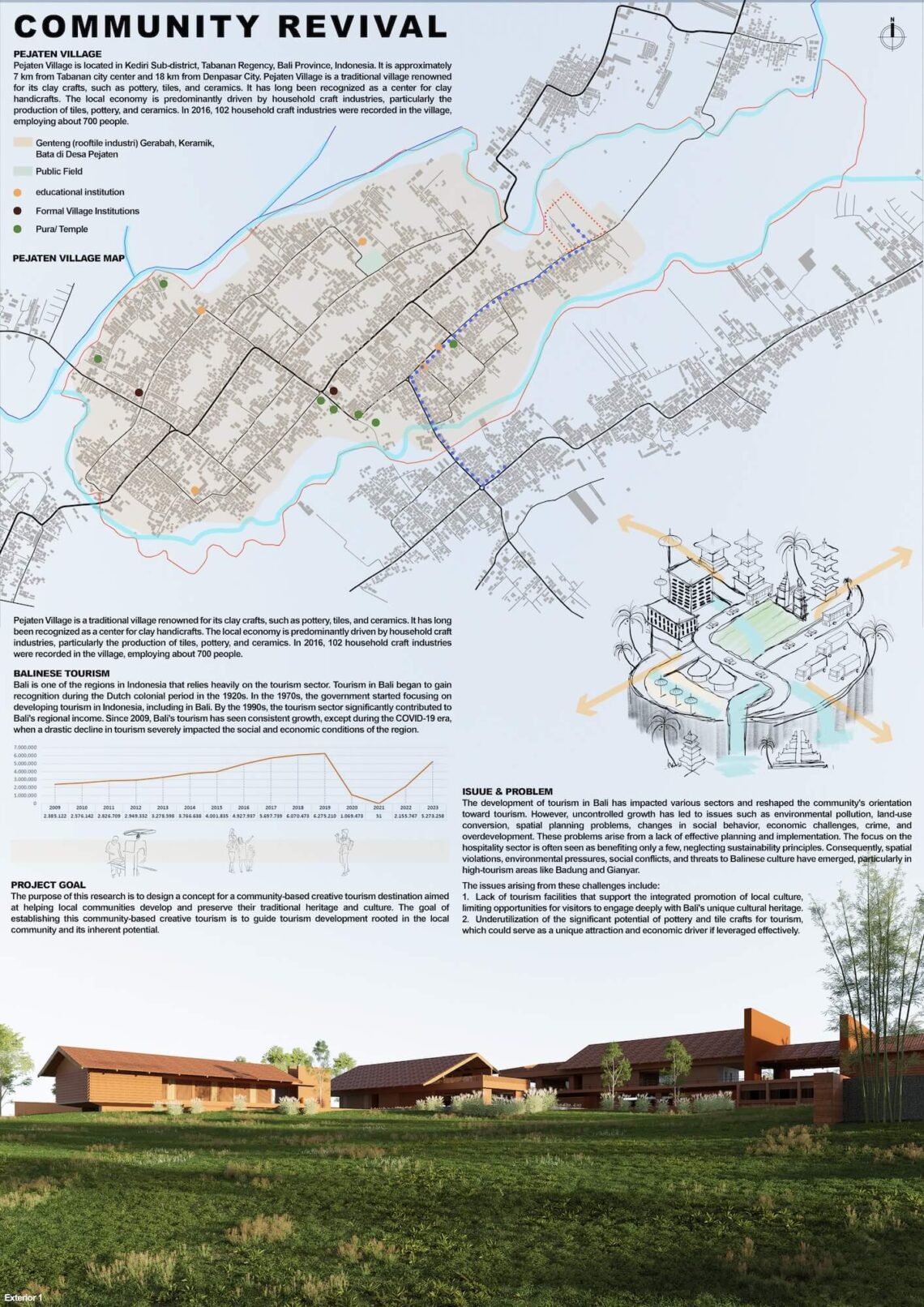
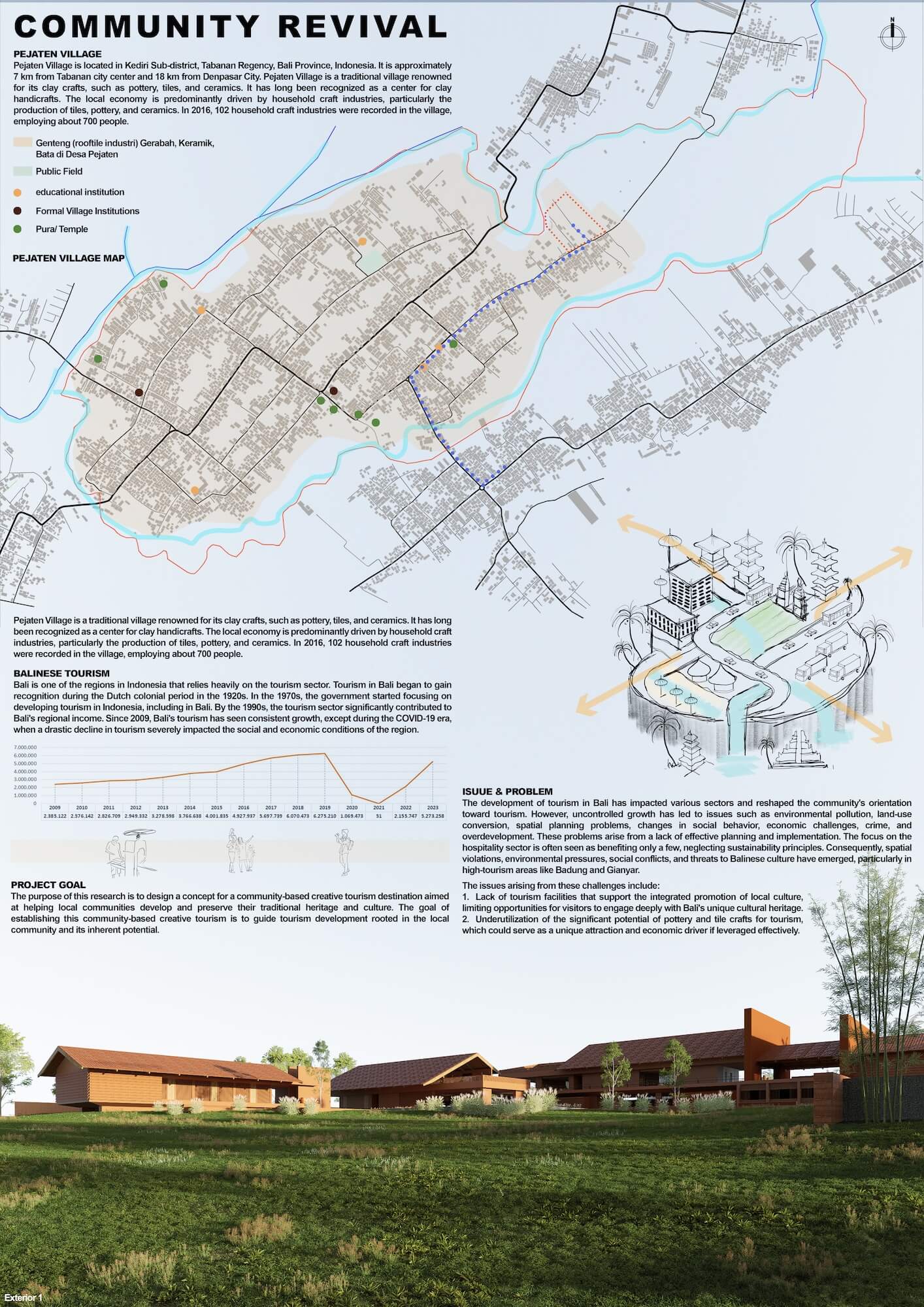
Pejaten Village is a traditional village renowned for its clay crafts, such as pottery, tiles, and ceramics. It has long been recognized as a center for clay handicrafts. The local economy is predominantly driven by household craft industries, particularly the production of tiles, pottery, and ceramics. In 2016, 102 household craft industries were recorded in the village, employing about 700 people.
BALINESE TOURISM
Bali is one of the regions in Indonesia that relies heavily on the tourism sector. Tourism in Bali began to gain recognition during the Dutch colonial period in the 1920s. In the 1970s, the government started focusing on developing tourism in Indonesia, including in Bali. By the 1990s, the tourism sector significantly contributed to Bali’s regional income. Since 2009, Bali’s tourism has seen consistent growth, except during the COVID-19 era, when a drastic decline in tourism severely impacted the social and economic conditions of the region.
ISSUE 8 PROBLEM
The development of tourism in Bali has impacted various sectors and reshaped the community’s orientation toward tourism. However, uncontrolled growth has led to issues such as environmental pollution, land-us conversion, spatial planning problems, changes in social behavior, economic challenges, crime, and overdevelopment. These problems arise from a lack of effective planning and implementation. The focus on thi hospitality sector is often seen as benefiting only a few, neglecting sustainability principles. Consequently, spatial violations, environmental pressures, social conflicts, and threats to Balinese culture have emerged, particularly in high-tourism areas like Badung and Gianyar.
The issues arising from these challenges include:
1. Lack of tourism facilities that support the integrated promotion of local culture, limiting opportunities for visitors to engage deeply with Bali’s unique cultural heritage.
2. Underutilization of the significant potential of pottery and tile crafts for tourism; which could serve as a unique attraction and economic driver if leveraged effectively.
PROJECT GOAL
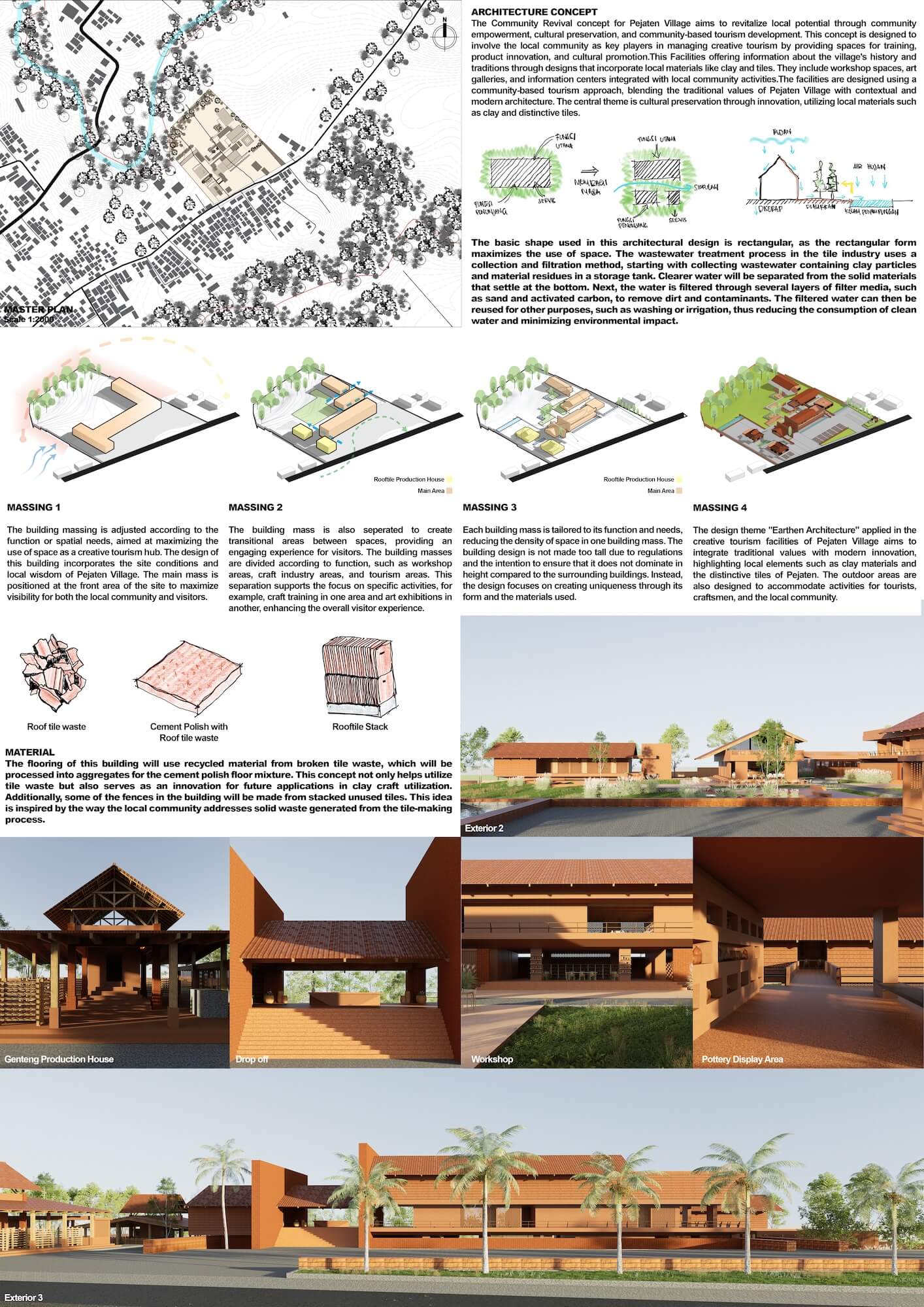
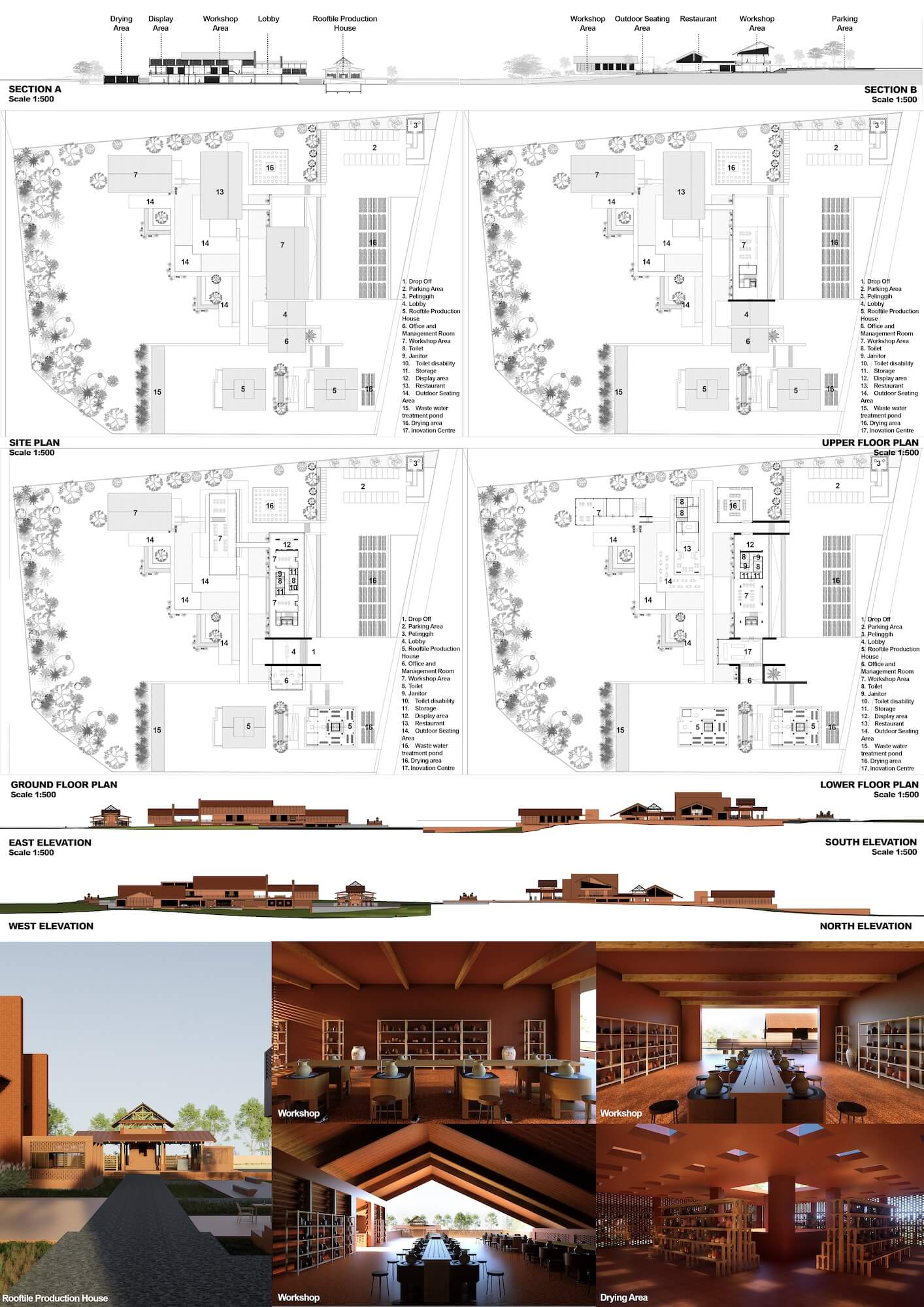
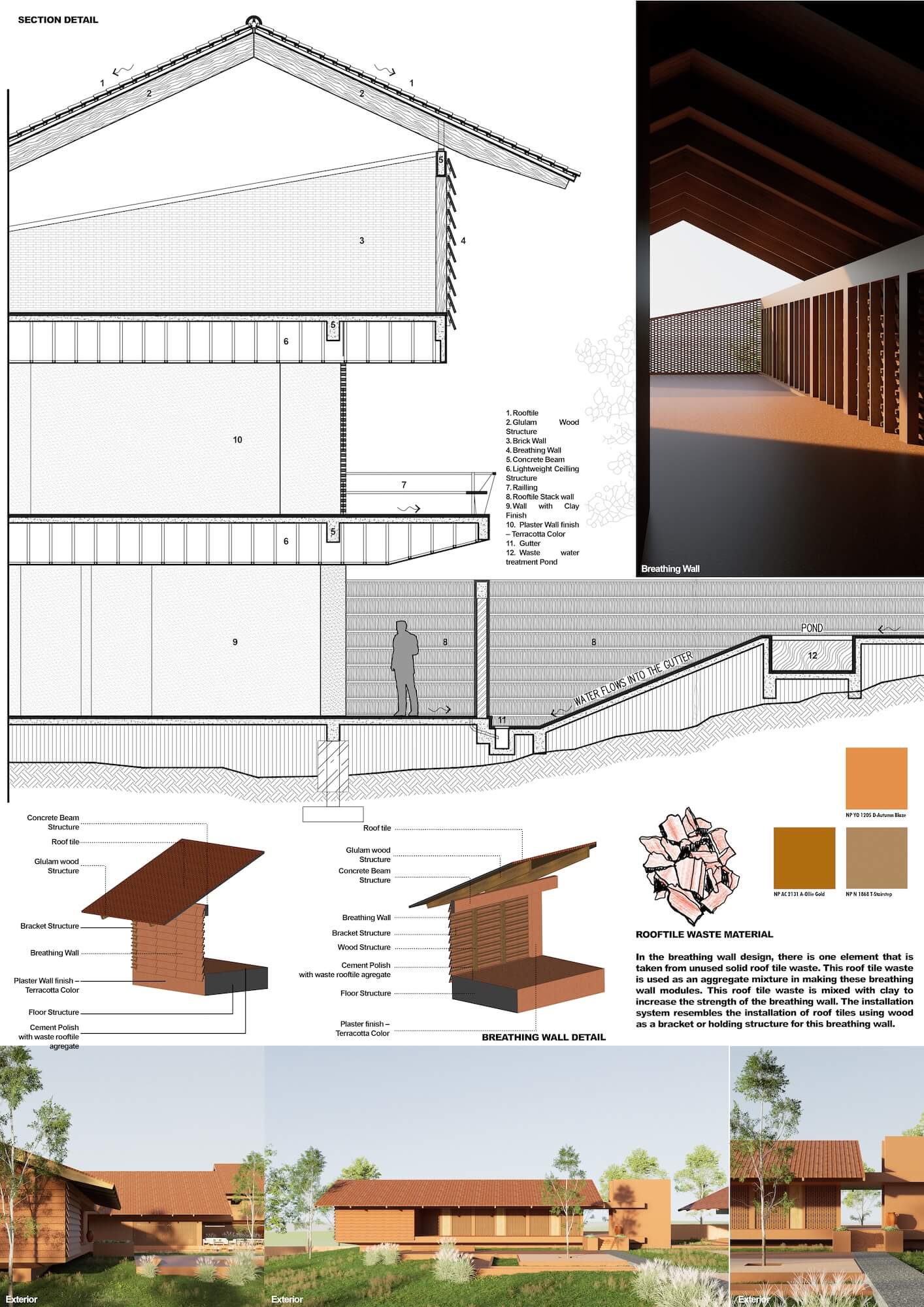
The purpose of this research is to design a concept for a community-based creative tourism destination aimed at helping local communities develop and preserve their traditional heritage and culture. The goal of establishing this community-based creative tourism is to guide tourism development rooted in the local community and its inherent potential.
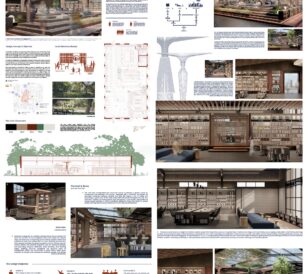
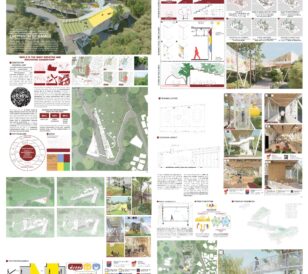
Presentation Board